
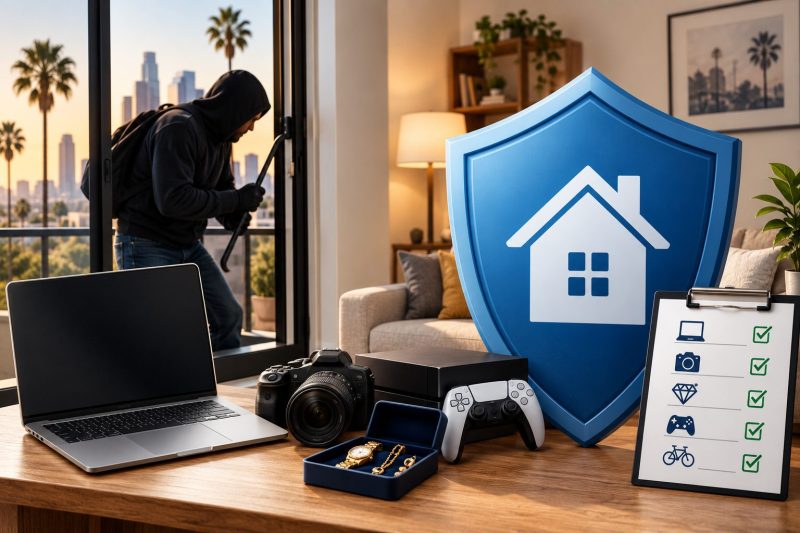
A Clear 2026 Guide to What Your Renters Policy Actually Pays for After a Burglary or Stolen Belongings, and How to Prepare Before It Happens
Coming home to a broken lock, missing electronics, or an emptied jewelry box is one of the more unsettling experiences a California renter can face, and the immediate question is almost always the same: Does my renters insurance actually cover this? The short answer is yes. Theft is one of the standard covered perils under a California renters insurance policy, and coverage typically extends further than most renters realize, including situations where the theft happens away from home entirely. This guide walks through exactly what theft coverage includes, where the limits and sub-limits apply, how the claims process works, and the preparation steps that make a real difference if you ever need to file a claim.
Understanding the specifics before a loss happens, rather than during the stressful aftermath of a break-in, is what allows renters to actually use their coverage effectively when it matters.
What Theft Coverage Actually Includes
A standard California renters insurance policy includes personal property coverage that responds to theft as a named peril, alongside fire, smoke, vandalism, and certain water damage events. If your belongings are stolen from your rental unit, whether during a burglary or a theft by someone who had legitimate access, such as a repair person or guest, your personal property coverage applies up to your policy’s overall limit, after your deductible is subtracted.
One detail that surprises many California renters is that theft coverage is not limited to your apartment itself. Most policies include off-premises coverage, meaning your personal property remains protected even when it is not physically inside your rental unit. If your bicycle is stolen from a bike rack outside your building, your laptop is taken from your car, or your phone is stolen while you are traveling, your renters policy may still respond to that loss, generally subject to the same limits that apply to theft at home.
Coverage generally requires that the loss result from an actual criminal act. This is why most insurers request a police report as part of the claims documentation, both to confirm the loss occurred and to support the value of what was taken.
Where Theft Coverage Has Limits
Standard renters policies apply sub-limits to certain categories of high-value personal property, meaning the total payout for those specific categories is capped at an amount that is often well below what the items are actually worth.
- Jewelry and watches: Jewelry theft coverage is commonly capped at a modest sub-limit unless specific pieces are scheduled separately on the policy.
- Cash and currency: Stolen cash is typically covered only up to a very low sub-limit, reflecting the difficulty of verifying the loss.
- Portable electronics: Some states apply specific sub-limits to portable electronics theft, though California renters generally see broader base coverage for this category than the sub-limits applied elsewhere.
- Firearms, furs, and collectibles: These categories frequently carry their own specific sub-limits distinct from the general personal property limit.
Renters who own jewelry, watches, or collectibles worth more than the standard sub-limit should ask their agent about scheduling those specific items on the policy. Scheduled personal property coverage provides protection closer to the item’s actual appraised value rather than being capped at the default sub-limit, and it is a relatively affordable addition for the protection it provides. Our broader overview of why every California renter needs renters insurance covers how to think about setting your overall coverage limits alongside these specific sub-limit considerations.
Actual Cash Value vs. Replacement Cost for Stolen Items
How much your policy actually pays after a theft depends significantly on whether you carry actual cash value or replacement cost coverage, and this distinction matters more for theft claims than many renters realize.
Actual cash value coverage reimburses you for what the stolen item was worth at the time of the theft, factoring in depreciation. A three-year-old laptop or television stolen under an actual cash value policy will be reimbursed at its depreciated value, which is often significantly less than the cost of buying a comparable new replacement.
Replacement cost coverage pays what it actually costs to replace the stolen item new, without any deduction for age or depreciation. This coverage type generally costs somewhat more in premiums, but for electronics, furniture, and other items that depreciate quickly, the difference in actual payout after a theft can be substantial. Confirming which type of coverage your policy carries, and upgrading to replacement cost if you currently have actual cash value, is one of the more impactful adjustments a California renter can make.
How to File a Theft Claim in California
The claims process moves faster and produces a better outcome when you understand the expected steps ahead of time rather than learning them for the first time during a stressful situation.
File a police report as soon as possible after discovering the theft. This is typically required documentation for your insurer and establishes an official record of the criminal act. Contact your insurance company to open a claim, providing as much detail as possible about what was stolen, when you discovered it, and any evidence you have of the items’ existence and value.
Documentation drives the strength and speed of a theft claim. Receipts, photos, and serial numbers for stolen items make the claim significantly easier to verify and process. This is precisely why building a home inventory before any loss occurs, rather than trying to reconstruct one from memory after a theft, makes such a meaningful difference in how smoothly the claim proceeds.
Before filing, it is worth briefly considering whether the loss amount justifies a claim relative to your deductible and the possibility of a rate increase at your next renewal. For a loss close to or below your deductible, the math may not favor filing. For a significant loss well above your deductible, filing the claim remains the right decision, even accounting for a potential premium adjustment.
Preparing Before a Theft Happens
The single most valuable thing a California renter can do to prepare for a potential theft claim is to build and maintain a home inventory. This does not need to be elaborate. Walking through your rental with your phone, photographing or recording video of each room with close-ups of higher-value items such as electronics, jewelry, musical instruments, and any collectibles, creates a documented record that dramatically speeds up and strengthens a future claim.
Record serial numbers for electronics and other items where applicable, and keep receipts for significant purchases in a digital folder. Store a copy of this inventory somewhere other than your rental unit itself, such as cloud storage, so it remains accessible even in a situation where your home is also affected by whatever event caused the loss.
Our agents at Global Guard Insurance recommend California renters update this inventory at least annually, or immediately after any significant purchase, since an outdated inventory that does not reflect recent additions to your household can leave real gaps in your claim documentation exactly when you need it most.
Frequently Asked Questions
Does renters insurance cover theft in California?
Yes. Theft is a standard covered peril under a California renters insurance policy. If your belongings are stolen from your rental unit, your policy’s personal property coverage applies, up to your coverage limit and after your deductible. Coverage generally requires that the theft be an actual criminal act, and most insurers request a police report as part of the claims documentation.
Does renters insurance cover theft that happens away from my apartment in California?
Yes, in most cases. Renters insurance personal property coverage typically extends beyond your rental unit, commonly referred to as off-premises coverage. If your bicycle is stolen from outside your building, your laptop is stolen from your car, or your phone is stolen while you are out, your renters policy may still apply. Off-premises theft coverage is usually subject to the same overall limits and any applicable sub-limits as theft that occurs inside your home.
Are there limits on jewelry and electronics theft coverage under California renters insurance?
Yes. Standard renters insurance policies typically apply sub-limits to certain high-value categories, including jewelry, watches, furs, and sometimes cash. These sub-limits are often far lower than what the items are actually worth. Renters who own valuable jewelry or collectibles should ask their agent about scheduling those specific items on the policy, which provides coverage closer to their actual value rather than being capped at the standard sub-limit.
How do I file a theft claim on my California renters insurance policy?
File a police report as soon as possible after discovering the theft, since most insurers require this documentation to process a claim. Contact your insurer to open the claim and provide details of what was stolen, including receipts, photos, or serial numbers where available. A home inventory completed before any loss occurs, including photos and a written list of your belongings, makes this documentation process significantly faster and more accurate.
Does filing a theft claim raise my renters insurance rate in California?
A theft claim can lead to a premium increase at your next renewal, since insurers factor claims history into future pricing. For a loss that is close to or below your deductible, it is often worth calculating whether filing a claim actually saves money once a potential rate increase is factored in. For significant losses well above your deductible, filing the claim is typically still the right financial decision despite the possibility of a modest rate adjustment.
What is the difference between actual cash value and replacement cost for stolen items in California?
Actual cash value coverage reimburses you for a stolen item’s depreciated value at the time of the theft, which may be significantly less than what it would cost to buy a new replacement. Replacement cost coverage pays what it actually costs to replace the item new, without a deduction for depreciation. Replacement cost coverage generally costs somewhat more in premiums but provides better protection meaningfully after a theft loss, particularly for electronics and furniture that depreciate quickly.
What can California renters do to prepare for a potential theft claim before it happens?
Create a home inventory that documents your belongings with photos or video, including close-ups of higher-value items such as electronics, jewelry, and musical instruments. Record serial numbers where applicable and keep receipts for significant purchases. Store a digital copy of this inventory somewhere other than your rental unit, such as cloud storage. Get a free California renters insurance quote, and our agents will help you confirm your theft coverage limits are set appropriately.
Make Sure Your California Renters Policy Covers What You Own
Theft coverage is only useful if your limits actually match what you own. The licensed agents at Global Guard Insurance can review your renters policy and confirm your coverage fits your belongings. Call (800) 750-9115 or get your free California renters insurance quote today.