A Clear 2026 Guide to HO-6 Coverage, HOA Master Policy Types, and the Gaps That Leave California Condo Owners Financially Exposed
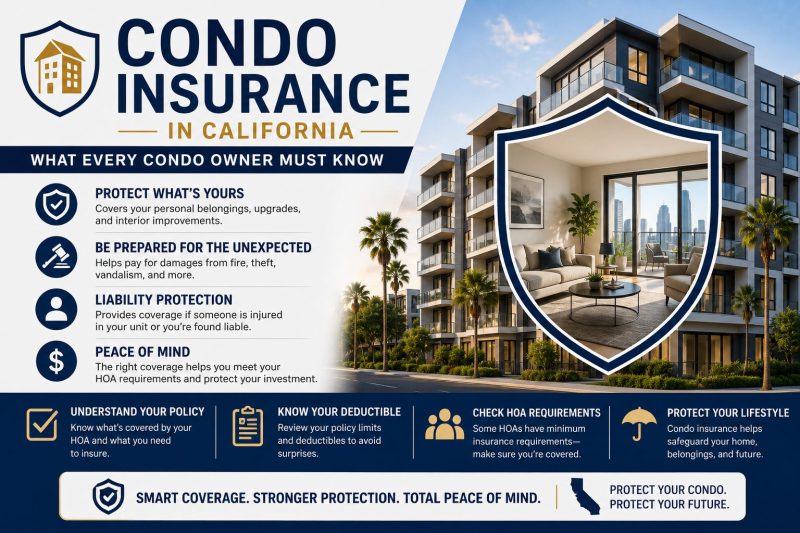
One of the most expensive misconceptions in California condo ownership is the belief that monthly HOA dues and the association’s master insurance policy provide complete protection. They do not. The master policy covers the building structure and shared common areas. Everything inside your individual unit, your personal belongings, your interior finishes, and your personal liability, is typically your own responsibility to insure through a separate policy called an HO-6, or condo insurance. This guide explains exactly where the master policy’s coverage ends and your own policy needs to begin, the three master policy structures used across California HOAs, and the specific gaps that most commonly catch condo owners off guard.
Understanding this division is not optional homework. Getting it wrong, either by underinsuring your unit’s interior or by assuming coverage that does not actually exist, is one of the most financially consequential mistakes a California condo owner can make.
Where the HOA Master Policy Ends, and Your Coverage Begins
Every California condominium association carries a master insurance policy, funded through HOA dues, that protects the building’s structure and shared spaces. This includes the exterior walls, roof, foundation, and common areas such as hallways, elevators, lobbies, pools, and parking structures. It also typically includes general liability coverage for injuries that occur in those shared spaces.
What the master policy does not cover, in the overwhelming majority of cases, is the interior of your specific unit. Your personal belongings, your interior finishes, any upgrades or improvements you have made, and your personal liability for incidents within your own unit fall outside the master policy’s scope and become your responsibility to insure through an HO-6 condo policy.
The exact boundary between what the master policy covers and what you must cover yourself depends entirely on which of the three master policy structures your specific HOA carries, and this is the single most important thing every California condo owner needs to determine before deciding how much of their own coverage to purchase.
The Three HOA Master Policy Types in California
Bare Walls Coverage
A bare walls master policy is the most limited form. It covers the building structure only up to the unfinished interior surface of each unit’s walls. Everything from that point inward, drywall, flooring, cabinetry, fixtures, and built-in appliances, is the individual owner’s responsibility to ensure. This structure results in the highest owner responsibility and, correspondingly, requires the largest dwelling coverage amount on the individual’s own HO-6 policy.
Single Entity Coverage
A single-entity master policy, sometimes called original specifications coverage, extends further than bare walls by covering the structure plus the original interior finishes as installed by the developer when the building was constructed. It does not cover any upgrades or improvements an individual owner has made beyond those original builder specifications. This is the most common master policy type in California condominium and townhome associations, striking a middle ground between premium cost and owner responsibility.
All-Inclusive Coverage
An all-inclusive, or all-in, master policy covers the structure, the original interior finishes, and owner improvements and upgrades. This structure leaves the individual owner with the least interior risk to insure directly, though personal property, personal liability, and additional living expenses remain the owner’s responsibility regardless of which master policy type the association carries. All-inclusive coverage is most common in higher-end condominium developments and high-rise buildings, and it typically carries the highest master policy premium, funded collectively through HOA dues.
What Your HO-6 Condo Policy Actually Covers
Regardless of which master policy type your HOA carries, a standard California HO-6 condo policy includes several core components that protect what the master policy does not.
Dwelling coverage, known as Coverage A, pays to repair or replace the interior of your unit, including flooring, drywall, cabinets, countertops, and built-in appliances, depending on how much of that scope your HOA’s master policy already covers. This is the component most directly affected by your master policy type, and it is also the coverage most commonly set too low, particularly by owners who assume an all-inclusive master policy means they need little to no Coverage A of their own.
Personal property coverage protects your furniture, electronics, clothing, and other belongings. Standard policies often default to actual cash value, which factors in depreciation and may not be enough to fully replace items after a loss. A replacement cost endorsement, available for a modest additional premium, pays the full current cost to replace items rather than their depreciated value.
Personal liability coverage protects you if someone is injured within your unit and you are found legally responsible. This works similarly to the liability coverage on a standard homeowners policy. California condo owners with significant assets should also evaluate whether their personal liability limit is adequate and whether a personal umbrella policy makes sense to extend that protection further, particularly given California’s litigation environment and rising liability judgments.
Loss of use coverage, sometimes called additional living expenses, pays for temporary housing and related costs if your unit becomes uninhabitable due to a covered event while repairs are completed.
Loss Assessment Coverage: The Most Overlooked Protection
Loss assessment coverage may be the single most valuable and least understood component of a California condo policy. If a covered loss exceeds the master policy’s limits, or if the master policy’s deductible must be split among all unit owners, the HOA can levy a special assessment charging each owner an individual share of the shortfall.
California HOA master policy deductibles have climbed substantially in recent years as associations attempt to manage rising premiums, and a large deductible or a coverage gap on a major claim, such as roof damage from a severe storm, can translate directly into a significant assessment bill for every unit owner in the building. Standard HO-6 policies typically include only a modest default amount of loss assessment coverage, often insufficient to cover a meaningful assessment. Increasing this coverage is usually available for a relatively small additional premium and is one of the highest-value adjustments a California condo owner can make to their policy.
Our agents at Global Guard Insurance recommend that every California condo owner request a copy of their HOA’s current master policy declarations page annually, particularly noting the deductible amount, since an increase in the master policy’s deductible from one renewal to the next is a direct signal that your own loss assessment coverage may need to increase as well.
Frequently Asked Questions
What is condo insurance and why do California condo owners need it?
Condo insurance, formally called an HO-6 policy, covers what your HOA’s master policy does not: the interior of your unit, your personal belongings, your personal liability, and your additional living expenses if a covered event displaces you. Many California condo owners mistakenly assume their monthly HOA dues and the association’s master policy provide complete coverage. In reality, the master policy protects the building structure and common areas, while everything inside your unit remains your own responsibility to insure.
What is the difference between bare walls, single entity, and all-in master policies in California?
A bare walls master policy covers only the building structure up to the unfinished interior surface of the unit, leaving the owner responsible for insuring everything inside, including drywall, flooring, and fixtures. A single-entity policy covers the structure plus the original interior finishes as built, but not owner upgrades. An all-in policy covers the structure, original finishes, and owner improvements, leaving the least amount of interior risk for the individual owner to insure through their own HO-6 policy.
What does loss assessment coverage do for California condo owners?
Loss assessment coverage pays your individual share of a special assessment your HOA levies against all unit owners after a covered loss that exceeds the master policy’s limits or when the master policy’s deductible must be split among owners. California HOA master policy deductibles have risen significantly in recent years, and a large uninsured deductible or coverage gap can result in each owner receiving an assessment bill. Standard HO-6 policies typically include a modest default amount, which many condo owners choose to increase for a relatively small additional premium.
Does condo insurance in California cover earthquake damage?
No. Standard HO-6 condo insurance policies in California exclude earthquake damage, the same as standard homeowners policies. California condo owners who want earthquake protection must purchase a separate policy or endorsement, typically through the California Earthquake Authority. Given California’s seismic activity, this is a meaningful gap for condo owners to evaluate, particularly for units in older buildings or those built before more recent seismic construction standards.
How much dwelling coverage do I need on my California condo policy?
The right dwelling coverage amount, known as Coverage A on an HO-6 policy, depends entirely on your HOA’s master policy type. Under a bare walls master policy, you need enough Coverage A to rebuild your unit’s entire interior, including flooring, drywall, cabinets, and fixtures. Under an all-in master policy, you need less Coverage A for the base interior but should still carry enough to cover any upgrades or improvements you have made beyond the builder’s original specifications, since those typically are not covered by the master policy.
Where can I find out what type of master policy my California HOA carries?
Request a copy of your HOA’s master policy declarations page and your community’s governing documents, commonly called the CC&Rs, from your property management company or HOA board. The declarations page will identify whether the policy is bare walls, single entity, or all-in. If the documentation is unclear, ask specifically whether coverage extends to original interior finishes within each unit, which is the key distinction between a bare walls policy and a single entity policy.
Does condo insurance cover injuries in common areas like the pool or hallway in California?
Generally, no. Injuries that occur in shared common areas, such as a pool, hallway, lobby, or parking structure, are typically the responsibility of the HOA’s master policy and its general liability coverage. Your individual HO-6 policy’s personal liability coverage applies to incidents that occur within your own unit or that you personally cause, not to injuries in areas the association is responsible for maintaining and insuring. Contact Global Guard Insurance to review your specific condo coverage needs.
Get the Right Condo Insurance Coverage in California
Knowing exactly where your HOA’s master policy ends and your own coverage begins is the key to protecting your California condo. The licensed agents at Global Guard Insurance can help you review your master policy type and structure the right HO-6 coverage. Call (800) 750-9115 or get your free California homeowners insurance quote today.